Hawaii Genealogy
USA (1,403,636) > Hawaii (2,364)
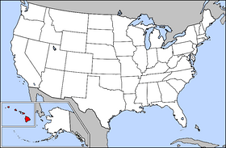
By Record Type

Hawaii Genealogy Research Guide
If you're not sure which records would be helpful, you can try our Ancestor Source Finder tool.
Cemetery Records (612)
Census Records (167)
Church Records (66)
City Directories (298)
Court Records (6)
Death Records (72)
Histories and Genealogies (42)
Immigration Records (61)
Land Records (3)
Map Records (83)
Marriage Records (70)
Military Records (164)
Minority Records (35)
Miscellaneous Records (38)
Newspapers and Obituaries (505)
Probate Records (9)
School Records (218)
Tax Records (1)
By County
By City
Captain Cook (in Hawaii County) (21)
Eleele (in Kauai County) (25)
Ewa Beach (in Honolulu County) (25)
Haiku (in Maui County) (21)
Haleiwa (in Honolulu County) (27)
Hamakua (in Hawaii County) (21)
Hana (in Maui County) (27)
Hanalei (in Kauai County) (24)
Hanapepe (in Kauai County) (28)
Hawi (in Hawaii County) (31)
Hilo (in Hawaii County) (88)
Holualoa (in Hawaii County) (28)
Honokaa (in Hawaii County) (30)
Honolulu (in Honolulu County) (743)
Honomu (in Hawaii County) (21)
Hoolehua (in Maui County) (23)
Kahoolawe (in Maui County) (26)
Kahuku (in Honolulu County) (24)
Kahului (in Maui County) (30)
Kailua (in Hawaii County) (45)
Kalaheo (in Kauai County) (24)
Kalaupapa (in Kalawao County) (25)
Kamuela (in Hawaii County) (22)
Kaneohe (in Honolulu County) (51)
Kapaa (in Kauai County) (40)
Kapaau (in Hawaii County) (27)
Kaunakakai (in Maui County) (32)
Kealakekua (in Hawaii County) (37)
Kekaha (in Kauai County) (28)
Kilauea (in Kauai County) (31)
Kohala (in Hawaii County) (22)
Koloa (in Kauai County) (32)
Kona (in Hawaii County) (21)
Kuau (in Maui County) (21)
Kukuihaele (in Hawaii County) (24)
Kula (in Maui County) (23)
Kurtistown (in Hawaii County) (28)
Lahaina (in Maui County) (42)
Laie (in Honolulu County) (32)
Lanai City (in Maui County) (31)
Laupahoehoe (in Hawaii County) (30)
Lihue (in Kauai County) (51)
Makawao (in Maui County) (31)
Mililani (in Honolulu County) (24)
Naalehu (in Hawaii County) (21)
Niulii (in Hawaii County) (21)
Paauilo (in Hawaii County) (23)
Pahala (in Hawaii County) (27)
Pahoa (in Hawaii County) (24)
Paia (in Maui County) (32)
Papaikou (in Hawaii County) (21)
Pearl City (in Honolulu County) (31)
Wahiawa (in Honolulu County) (28)
Waialua (in Honolulu County) (32)
Waianae (in Honolulu County) (33)
Wailuku (in Maui County) (74)
Waimea (in Hawaii County) (46)
Waipahu (in Honolulu County) (29)
Hawaii Genealogy Research Guide
Quick Facts
Hawaii is the only state that was once an independent kingdom, and its records carry that history in layers — a Polynesian society, a nineteenth-century monarchy, a brief republic, a long territorial period, and finally statehood. That changing sovereignty, together with a land system found nowhere else in the country, shapes where and how family records survive.
- Capital: Honolulu, on the island of Oʻahu, the seat of government since the Kingdom era.
- Statehood: August 21, 1959, the fiftieth state, admitted after nearly six decades as a United States territory.
- Counties: five — Hawaiʻi, Maui, Kauaʻi, Honolulu, and Kalawao — all organized under the County Act of 1905. Kalawao, the former Hansen’s-disease settlement on the Kalaupapa peninsula of Molokaʻi, is the smallest county in the nation and is administered by the state Department of Health rather than an ordinary county government.
- Land type: Hawaii is not a federal (public-domain) state, and there are no General Land Office records. Title descended from the Hawaiian Kingdom and was converted to private ownership through the Great Māhele of 1848 and the Kuleana Act of 1850, so early land research runs through Land Commission Awards, Royal Patents, and Grants rather than federal land records.
- Nickname and motto: the Aloha State; the state motto is Ua Mau ke Ea o ka ʻĀina i ka Pono ("The life of the land is perpetuated in righteousness").
- Where records live: with only five counties and no town or parish civil jurisdictions, most records are kept statewide — vital records through the Department of Health, and historical government, land, court, and probate records largely through the Hawaii State Archives — while modern court and land records are organized by judicial circuit and county.
Libraries and Archives
Hawaii’s principal collections are concentrated in Honolulu, which held the Kingdom’s government offices and remains the center of state record-keeping, while specialized archives preserve missionary, plantation, and ethnic-community records. The leading repositories include:
- Hawaii State Archives — the core repository for Kingdom, Republic, Territory, and early state government records: vital-statistics indexes, the Māhele Book and land records, census returns, passenger-manifest indexes, tax ledgers, and judiciary and probate files.
- Hawaii State Public Library System — statewide library access, including local histories, directories, newspapers, and licensed genealogy databases.
- Hawaiian Historical Society — founded in 1892; manuscripts, photographs, and one of the deepest collections of published Hawaiian history.
- Bernice Pauahi Bishop Museum, Library and Archives — the foremost collection of Native Hawaiian genealogies of the aliʻi, Hawaiian-language newspapers, and Pacific manuscripts.
- Hawaiian Mission Houses Historic Site and Archives — the records of the American Protestant mission from 1820, including church registers, journals, and letters, with a companion digital archive.
- University of Hawaiʻi at Mānoa Library, Hawaiian and Pacific Collections — the sugar-plantation archives, the Hawaiʻi War Records Depository, and extensive Hawaiian-language holdings.
- National Archives at San Francisco — the federal records for Hawaii after 1900, including district-court naturalizations, Chinese Exclusion case files, and immigration records.
- The FamilySearch Library and its worldwide FamilySearch Centers hold extensive Hawaii microfilm and digital collections.
- Japanese Cultural Center of Hawaiʻi — Japanese family-history guidance, oral histories, and internment-era records.
- Portuguese Genealogical and Historical Society of Hawaiʻi — passenger and passport indexes and marriage records for the Portuguese community.
Major Websites
These sites host digitized Hawaii records and indexes. Subscription sites are marked ($).
- FamilySearch — free; the backbone finding aid, with the FamilySearch Research Wiki, catalog, and large digitized collections of Hawaii vital, land, probate, court, immigration, and church records, plus its Full-Text Search.
- Ancestry ($) — Hawaii vital, census, passenger, naturalization, probate, and directory collections.
- MyHeritage ($) — Hawaii vital records, passenger lists, and census collections.
- Findmypast ($) — Hawaii marriage collections.
- Papakilo Database — free (registration required); the Office of Hawaiian Affairs’ portal to Māhele land records, Hawaiian-language newspapers, government documents, and genealogy indexes.
- Ulukau: The Hawaiian Electronic Library — free; digitized Hawaiian-language books, newspapers, Māhele records, and genealogy indexes.
- Hawaii State Archives Digital Collections — free; digitized record series drawn from the State Archives, including census, vital-statistics, land, and photograph collections.
- Chronicling America — free; the Library of Congress newspaper archive, including Hawaii titles.
- Find a Grave and BillionGraves — free; cemetery listings, photographs, and transcriptions.
- Internet Archive and HathiTrust — free; digitized Hawaii histories, government documents, and law books.
Law and Government
The statutes and constitutions of the Hawaiian Kingdom, Republic, and Territory explain the jurisdictions and offices that produced genealogical records, and most of the foundational texts have been digitized and are free to read.
- Punawaiola — free; a repository of Kingdom-era statutes and codes, including the 1840 constitution (Ke Kumu Kānāwai), the 1850 Penal Code, the 1859 Civil Code, the 1884 Compiled Laws of the Hawaiian Kingdom, and the penal and civil laws of 1897.
- The Session Laws of Hawaii — free on the Internet Archive; the acts of the legislature from the Kingdom through the modern state, several early volumes printed in both Hawaiian and English.
- Roster: Legislatures of Hawaii, 1841–1918 (Robert C. Lydecker) — free on the Internet Archive; the constitutions of the monarchy and the Republic, membership rosters, and the speeches of the sovereigns.
- Ulukau hosts transcriptions of Hawaiian government documents, including the constitutions and laws in Hawaiian and English.
- The annual laws, revised statutes, and the 1900 Organic Act creating the Territory are also digitized on the Internet Archive and HathiTrust.
Vital Records (Birth, Marriage, Death)
Civil registration in Hawaii is unusually early for the United States but unevenly kept. The Kingdom required registration of births and marriages from 1842 and of deaths from 1859, but surviving records are sparse before 1896, when the government’s Board of Health took charge of registration; consistent compliance came only around 1929. A handful of clergy and mission registers reach back to the 1820s, so church records are essential substitutes for the earliest generations.
Modern birth, marriage, civil-union, and death certificates are held by the Hawaii State Department of Health. Records are confidential; birth certificates are open to the public after 100 years, while marriage, divorce, and death records are open after 75 years. Before then, certified copies are limited to the person named, close family, legal representatives, or those with a direct and tangible interest, and a fee applies. Use these indexes to identify a record, then order it:
- Births (from the Kingdom era): Hawaii Births and Baptisms, 1843–1909 — free on FamilySearch; also Hawaii Birth Certificates and Indexes, 1841–1944 ($) on Ancestry.
- Marriages (from 1826): Hawaii Marriages, 1826–1954 — free on FamilySearch; the Board of Health Marriage Record Indexes, 1909–1989 are also free on FamilySearch, and Hawaii Marriage Certificates and Indexes, 1841–1944 ($) is on Ancestry.
- Deaths (from 1841): Hawaii Death Records and Death Registers, 1841–1925 — free on FamilySearch; also Hawaii Death Certificates and Indexes, 1841–1942 ($) on Ancestry.
- Combined index cards: Hawaii, Births, Marriages, and Death Cards, 1850–1950 ($) indexes all three record types together.
- Certificates of Hawaiian Birth: a program running 1911–1972 allowed people born in the Islands before territorial registration to establish a delayed birth record; the surviving files are among the State Archives and FamilySearch holdings.
- Divorce: Hawaii Divorce Records, 1848–1892 ($) on Ancestry, and Circuit Court divorce records, 1849–1915, free on FamilySearch.
History and Timeline of Major Events
Key dates that shaped Hawaii’s jurisdictions and records:
- c. 1000–1300 — Polynesian voyagers settle the Hawaiian Islands.
- 1778 — Captain James Cook makes the first documented European contact and names the group the Sandwich Islands.
- 1795–1810 — Kamehameha I unifies the islands into the Kingdom of Hawaiʻi, completing the conquest by 1810.
- 1820 — The first company of American Protestant missionaries arrives from New England.
- 1822 — The mission press at Honolulu begins printing, giving Hawaiian a written form.
- 1827 — The first Roman Catholic missionaries arrive.
- 1840 — The first constitution transforms the absolute monarchy into a constitutional monarchy.
- 1842 — Kingdom registration of births and marriages begins.
- 1848 — The Great Māhele divides the lands of the Kingdom.
- 1850 — The Kuleana Act allows commoners to claim fee-simple kuleana lands.
- 1852 — The first Chinese contract laborers arrive to work the sugar plantations.
- 1859 — Death registration begins and a Civil Code is enacted.
- 1868 — The first Japanese laborers, the "Gannen Mono," arrive.
- 1878 — The first Portuguese laborers arrive from Madeira and the Azores.
- 1885 — Large-scale Japanese immigration begins under agreement with Japan.
- January 17, 1893 — The Hawaiian monarchy is overthrown and a Provisional Government is established.
- July 4, 1894 — The Republic of Hawaiʻi is proclaimed.
- 1897 — Native Hawaiians circulate the Kūʻē petitions opposing annexation.
- August 12, 1898 — The United States annexes Hawaii.
- 1900 — The Organic Act creates the Territory of Hawaiʻi; Hawaii appears in the United States federal census for the first time; contract labor is banned.
- 1900–1906 — New plantation-labor streams arrive: Puerto Ricans from 1900, Koreans from 1903, and Filipinos from 1906.
- 1905 — The County Act organizes the five counties.
- December 7, 1941 — The attack on Pearl Harbor brings the United States into World War II, and martial law is imposed on the Islands.
- 1942–1943 — The 100th Infantry Battalion and the 442nd Regimental Combat Team are formed largely from Hawaii’s Japanese American community.
- August 21, 1959 — Hawaii is admitted as the fiftieth state.
Census Records and Substitutes
Federal censuses reach Hawaii only from 1900, taken shortly after annexation, and Hawaii appears in every decennial census since — 1900, 1910, 1920, 1930, 1940, and 1950. They are free on FamilySearch and on the National Archives 1950 census site, and are also searchable on Ancestry ($) and MyHeritage ($).
Kingdom censuses. Before annexation the Hawaiian Kingdom took its own censuses roughly every few years from the 1840s, but most survive only as statistical summaries; the returns that name individuals exist for just a few years and districts, and where they survive they predate the federal enumerations by decades. What survives by year:
- 1866: name lists survive chiefly for the Lahaina district of Maui, with a few sheets for other areas and returns for ships then in port.
- 1878: name schedules survive for the Lahaina district of Maui, the Hāmākua district of the island of Hawaiʻi, and the Ewa, Waiʻanae, and Waialua districts of Oʻahu.
- 1890: the most complete Kingdom enumeration, with name schedules for every island except Niʻihau.
- 1896: name schedules survive for Honolulu.
- Surviving Kingdom schedules for the island of Hawaiʻi and other districts are partially indexed and imaged in Hawaii, Census records, 1878–1896, free on FamilySearch, and additional returns are digitized among the Hawaii State Archives collections.
Substitutes. Where censuses are missing, other records place a family in time and place — city and business directories (Honolulu directories survive from the 1880s), Kingdom and territorial tax lists, voter and citizenship registers, and the Hawaiian-language newspapers indexed through Papakilo and Ulukau.
- Directories: the 1890 Honolulu Directory ($) on Ancestry, with later territorial directories digitized by the University of Hawaiʻi.
- Voter and citizenship rolls: the Register of Voters, Hawaiian Islands, 1887–1888 and the 1897 anti-annexation (Kūʻē) petitions are free on FamilySearch, and Hawaii Voter Records, 1864–1910 ($) is on Ancestry — each naming large numbers of residents.
Church Records
Because civil registration is thin before the 1890s, church and mission records are the most important early substitute for vital records, and Hawaii’s mission archives are exceptionally rich. The main traditions are:
- Protestant (Congregationalist) mission, from 1820: the American Board missionaries kept baptism, marriage, and membership registers for stations across the Islands, preserved with their journals and letters at the Hawaiian Mission Houses digital archive.
- Roman Catholic, from 1827: parish registers of baptisms, marriages, and burials are held by the Diocese of Honolulu, which handles sacramental and genealogical record requests.
- Latter-day Saints, from 1850: congregations kept membership and genealogical records; early membership records and annual genealogical reports are available through the FamilySearch Library and catalog.
- Anglican (the Reformed Catholic Church, later the Episcopal Church), from 1862: established at the invitation of Kamehameha IV and Queen Emma, its parish registers document many prominent Kingdom families.
- Buddhist and Shinto: temples serving the Japanese immigrant community from the 1890s kept membership and death records, often the best source for first-generation immigrants.
Court Records
Hawaii’s courts changed with each change of government, and their files reach well beyond lawsuits into probate, guardianship, adoption, divorce, and naturalization. The main courts a researcher encounters are:
- Kingdom courts (from 1847): an act organizing the judiciary created a Supreme Court, circuit (superior) courts, and district courts; their records, and those of the earlier chiefs’ courts, are largely at the Hawaii State Archives.
- Circuit courts: since 1893 the Islands have been divided into judicial circuits — the First (Oʻahu), Second (Maui, Molokaʻi, and Lānaʻi), Third and Fourth (the island of Hawaiʻi, merged in 1943), and Fifth (Kauaʻi and Niʻihau) — and the circuit courts created probate, divorce, civil, and criminal records.
- Custody: case files from before 1900 are generally at the Hawaii State Archives and later files at the circuit courts; because appeals and many neighbor-island probates were filed in Honolulu, First Circuit records often hold cases from across the Islands.
The Hawaii State Archives judiciary records (roughly 1839–1970) — civil, criminal, probate, will, divorce, and marriage records — are indexed by name, and modern case information is available through the Hawaii State Judiciary.
Ethnic/Minority Records
Hawaii’s population has been strikingly diverse since the Kingdom era, and knowing where a community settled points to the records most likely to document a family.
- Native Hawaiians (Kānaka Maoli). The oldest and most fully documented families, traced through oral genealogies, land records, and the Hawaiian-language press. The Papakilo Database and Ulukau index genealogies, Māhele awards, and newspaper notices; the Bishop Museum holds the great genealogies of the aliʻi; and Kamehameha Schools maintains a Hawaiian ancestry registry for verifying descent.
- Japanese. The largest immigrant group, drawn to the plantations from 1868 and especially after 1885. The Japanese Cultural Center of Hawaiʻi assists with koseki (Japanese household registers) and holds oral histories and internment-era records.
- Chinese. Present from 1852, and distinctively documented by Chinese Exclusion case files and certificates of identification, such as Hawaii Certificates of Identification for Chinese Arrivals, 1895–1898 ($); the Hawaii Chinese History Center collects family histories.
- Portuguese. Recruited from Madeira and the Azores from 1878; the Portuguese Genealogical and Historical Society of Hawaiʻi indexes their passenger, passport, and marriage records.
- Koreans and Puerto Ricans. Koreans arrived from 1903, including many "picture brides," and Puerto Ricans from 1900; their arrivals appear in the Honolulu passenger lists.
- Filipinos. The largest early-twentieth-century labor migration, from 1906; plantation-labor and passenger records are extensively documented, including a large digitized Filipino plantation-labor collection at Brigham Young University.
Immigration and Naturalization
Honolulu was the gateway for one of the most varied labor migrations in American history, as sugar and pineapple plantations recruited workers from Asia, Europe, and the Caribbean. Passenger manifests survive from 1843.
- Kingdom-era arrivals (1843–1900): Collector of Customs ships’ passenger manifests are free on FamilySearch, and Hawaii Arriving and Departing Passenger Lists, 1843–1898 ($) is on Ancestry.
- Territorial arrivals (from 1900): Honolulu passenger lists, 1900–1953 are free on FamilySearch and also on MyHeritage ($); Honolulu arriving and departing passenger and crew lists, 1900–1959 ($) and an index to arrivals, 1900–1952 ($) are on Ancestry.
- Filipino arrivals: an index to Filipino passengers arriving at Honolulu, 1900–1952 is free on FamilySearch.
Naturalization. Before 1900 the Kingdom and Republic naturalized, denized, and issued passports to foreign residents through their own offices; after annexation the process moved to the territorial and federal courts.
- Kingdom and Republic: naturalization, denization, and passport registers are held at the Hawaii State Archives and indexed on Ulukau; Hawaii Denization Records ($) and Hawaii Passport Records, 1849–1900 ($) are on Ancestry, and passport records, 1874–1898, are free on FamilySearch.
- Territorial and federal: post-1900 naturalizations were handled by the federal district court and are held by the National Archives at San Francisco, which also holds the Chinese Exclusion case files, indexed in Hawaii, Index to Chinese Exclusion Case Files, 1903–1944 ($).
Land Records
Land is the heart of Hawaiian genealogy. Before the mid-nineteenth century all land was held communally under the king and chiefs; the privatization of that system in the Great Māhele created a distinctive body of records that name Hawaiian families precisely and often reach back before any vital record.
Under the traditional system the mōʻī (king) held ultimate title, high chiefs and their konohiki (land agents) managed the ahupuaʻa — wedge-shaped divisions running from the mountains to the sea — and the makaʻāinana (commoners) lived on and worked the land without owning it. The Great Māhele of 1848 divided this land into shares recorded in the Māhele Book:
- Crown Lands: reserved for the reigning monarch.
- Government Lands: held by the Kingdom to support public functions and available to be sold or leased as Grants.
- Konohiki Lands: awarded to roughly 245 chiefs and land agents in return for their service to the Kingdom.
- Kuleana Lands: under the Kuleana Act of 1850, commoners could claim fee-simple title to the house lots and cultivated plots they actually used, on giving personal testimony — the records that most often document ordinary Hawaiian families.
A claim moved from the Land Commission (the Board of Commissioners to Quiet Land Titles) through the claimant’s registered claim and sworn testimony to a numbered Land Commission Award (LCA) and finally a Royal Patent conveying title; the Boundary Commission later fixed the boundaries of the ahupuaʻa. Outright purchases from the Kingdom, Territory, and State were recorded separately as Grants. The records are kept at:
- Hawaii State Archives: the Māhele Book, the Native and Foreign Registers and Testimonies, and the indexes to Land Commission Awards and Royal Patents.
- Bureau of Conveyances: the state Bureau of Conveyances records deeds, mortgages, and Land Court documents centrally for the whole state rather than by county.
Online tools make much of this searchable by name:
- The Papakilo Database (free, registration required) indexes the Māhele ʻĀina awards and unclaimed claims.
- AVA Konohiki (free) provides transcribed and imaged Land Commission Awards, the Māhele Book, and Native and Foreign Testimonies.
- Ulukau hosts a searchable Māhele database, including kuleana awards for all islands.
- Waihona ʻAina ($) offers subscription databases of the Māhele, Grants, Royal Patents, and Boundary Commission awards.
- The Hawaii Grantor and Grantee Index, 1845–1909 is free on FamilySearch, and FamilySearch Full-Text Search makes many deeds and patents searchable by every name they contain.
Military Records
Hawaii’s people served under the Kingdom and, after annexation, in the United States armed forces, and the Islands were themselves a theater of the Second World War.
- Kingdom military: the Royal Guard and household troops of the monarchy are documented among the Hawaii State Archives holdings.
- Spanish-American War and World War I: territorial service records survive; Hawaii World War I service records, 1917–1919 are free on FamilySearch, and the State Archives holds the originals.
- World War II: the attack on Pearl Harbor on December 7, 1941 opened the war, and Hawaii’s Japanese American community formed the 100th Infantry Battalion and the 442nd Regimental Combat Team, which became the most decorated American unit of its size in the war. Hawaii World War II draft-registration cards, 1940–1945 are free on FamilySearch, and the University of Hawaiʻi’s Hawaiʻi War Records Depository and Japanese American Veterans Collection preserve unit and personal records.
- Later conflicts and casualty lists are documented through the National Archives.
Probate Records
Probate — wills, administrations of intestate estates, and guardianships of minors — is among the richest sources for family relationships in Hawaii, naming heirs and linking generations. The Kingdom’s courts probated estates from the 1840s; after annexation the territorial and then state circuit courts took over, and guardianships and adoptions were filed with probate cases from 1859. The key custody line is 1900: records before it are largely at the Hawaii State Archives, and later files at the circuit courts.
- Kingdom and territorial probate: Hawaii, probate packet records, 1814–1917 are free on FamilySearch (note that systematic packets primarily begin in the late 1840s; the 1814 start date represents a few retroactive filings).
- Statewide wills and probate: Hawaii, Wills and Probate Records, 1822–1962 ($) on Ancestry is name-searchable across the Islands.
- Indexes: Ulukau indexes Hawaiian probate records and wills, and FamilySearch Full-Text Search makes many unindexed estate files searchable by every name they contain.
Tax Records
Kingdom and territorial tax lists place a family in a specific district and year and are valuable substitutes where censuses are thin, since the earliest tax rolls predate the surviving censuses; several consecutive years can reveal when a young man came of age, moved, or died and left heirs.
- Kingdom and territorial tax rolls: Hawaii tax assessment rolls, 1847–1903 are indexed and imaged free on FamilySearch, and tax-assessment and collection ledgers of the nineteenth and early twentieth centuries are among the Hawaii State Archives digital collections.
- Custody: the Hawaii State Archives holds the Kingdom and territorial tax records, while modern property-tax and tax-map records are kept by the counties.
Back to Top